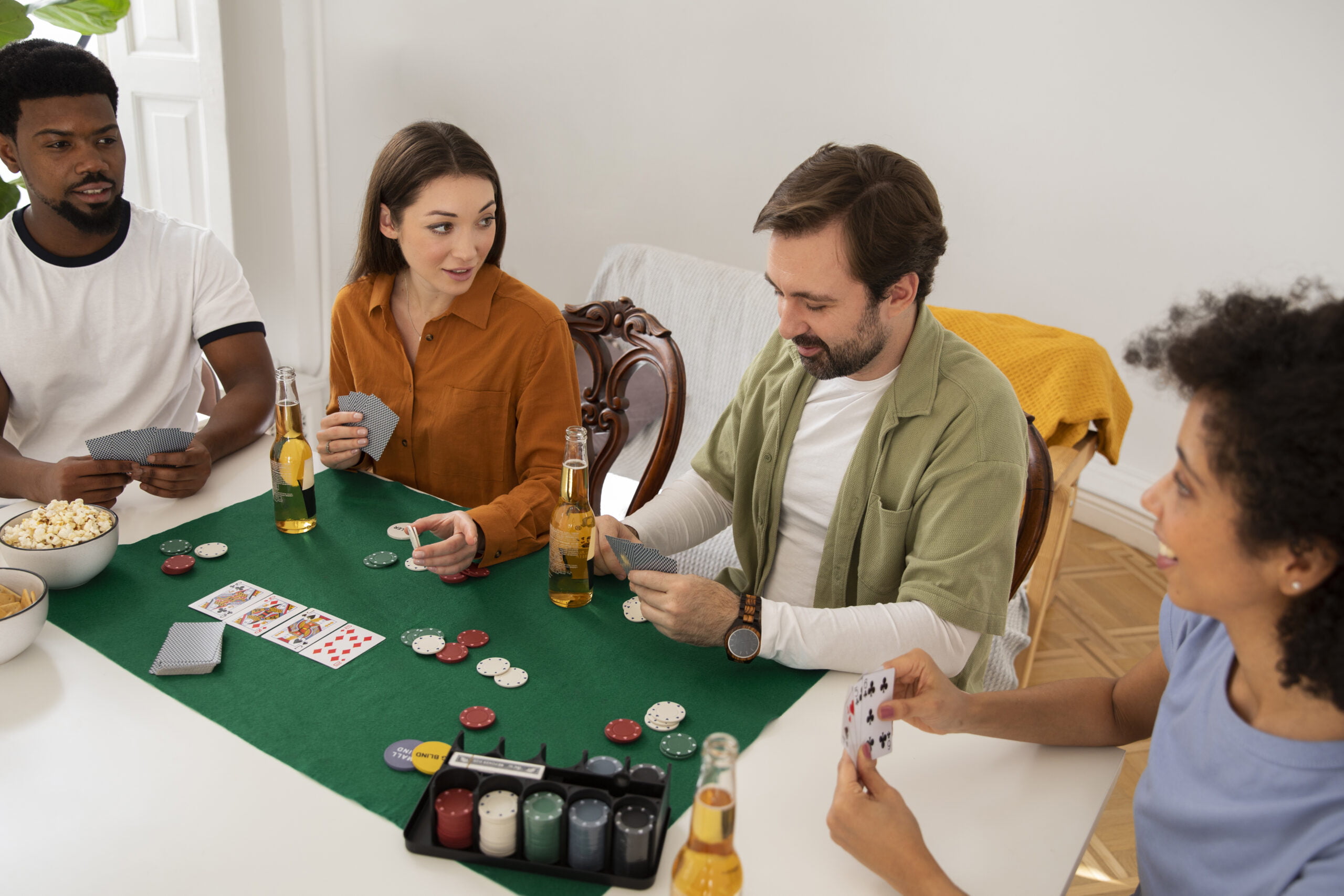
Finding the best poker strategy for you is crucial if you want to optimize your poker game.
Good poker players know that every hand is a winner. It’s not about the cards you’re dealt, but how you play them. This post breaks down some of the most basic and best poker strategy.
If you’re completely new to poker, learn the basic rules before diving into strategy – our guide to how to play poker covers them end to end, and the poker hand rankings are worth memorizing first. Or watch the four-minute version below.
What Is Poker Strategy?
Poker strategy is one of those things that really surprises players who just started playing poker. Most people outside of poker think it’s a game of luck. You’re either dealt a great hand or a terrible hand. And the player who’s dealt the best hand always wins.
Luckily, poker is much more complex than that. After all, it’s no coincidence that the same handful of players always end up at the final table.
The Different Aspects of Poker Strategy
There are of course a bunch of different aspects to a good poker strategy. In this blog post, we break down some of the most effective parts of poker strategy.
Poker isn’t just one game, but rather a whole genre of card games. The most widespread version of poker is Texas Hold’em, and that’s the format we’ll talk about throughout this blog post.
How to Bluff in Poker
A pair of aces or a royal flush doesn’t come around too often in Texas Hold’em. Most hands you’re dealt are merely okay, or straight up bad. That means you can’t simply fold everything and go all in on the rare monster hand.
This is simply too easy to read, and your opponent will catch on to this poker strategy. This is why we bluff.
Bluffing is when you lie and pretend to have a great hand, in an effort to have your opponents fold their otherwise better hand. Bluffing is a great tool in your poker strategy, since it allows you to win some pots even with weak hands and also keeps your opponents guessing.
Poker Betting Strategy
Betting is obviously a core aspect of poker, and probably what most people think of when they think poker. Shoving that pile of chips into the pot. But poker betting is actually a science and one of the most important parts of poker strategy.
Betting is usually divided into two different kinds of bets: a blocking bet and a value bet.
Blocking Bets
Blocking bets are a mind game. Sometimes, you’re dealt a hand that could turn into something with the right community cards. So you may want to see a flop or a turn.
In this case, you want the price of further participation to stay low, so you can’t have other players betting heavily. We place what’s called a blocking bet: a small bet designed to tell other players that you may have something, keeping them from placing huge bets of their own.
If done right, a blocking bet can control the action of other players and keep the game right where you want it.
Value Bets
Value bets are essentially the opposite of bluffing in poker, since this time you actually want the other players to call or, even better, raise. Let’s say you’re dealt a great hand, like pocket aces, or that you hit a flush from the flop. In this case, you’re on track to win the hand.
So naturally, you want to build the pot and raise your imminent prize. But you can’t just go all in at this stage, since this would most likely scare off opponents and have them fold, leaving you with just the blinds and some change in the pot. Not a great win.
In this case we place a value bet: a smaller bet nudging opponents to either call, or even better, raise. This means they are still in the game, betting chips and driving up the pot for you, thinking it’s all their idea and that they are in charge.
Table Position in Poker
You may not know it, but the way you’re all seated around the poker table has a big impact on the game. More specifically, in what order you get to act your turn in a round.
Every round of poker has a dealer, a small blind and a big blind. The small and big blind are required to place a bet up front, so the first player to act freely is the player sitting after the big blind. This is usually thought of as the worst position to be in, since you haven’t seen anything from your opponents. You have to act from your cards alone.
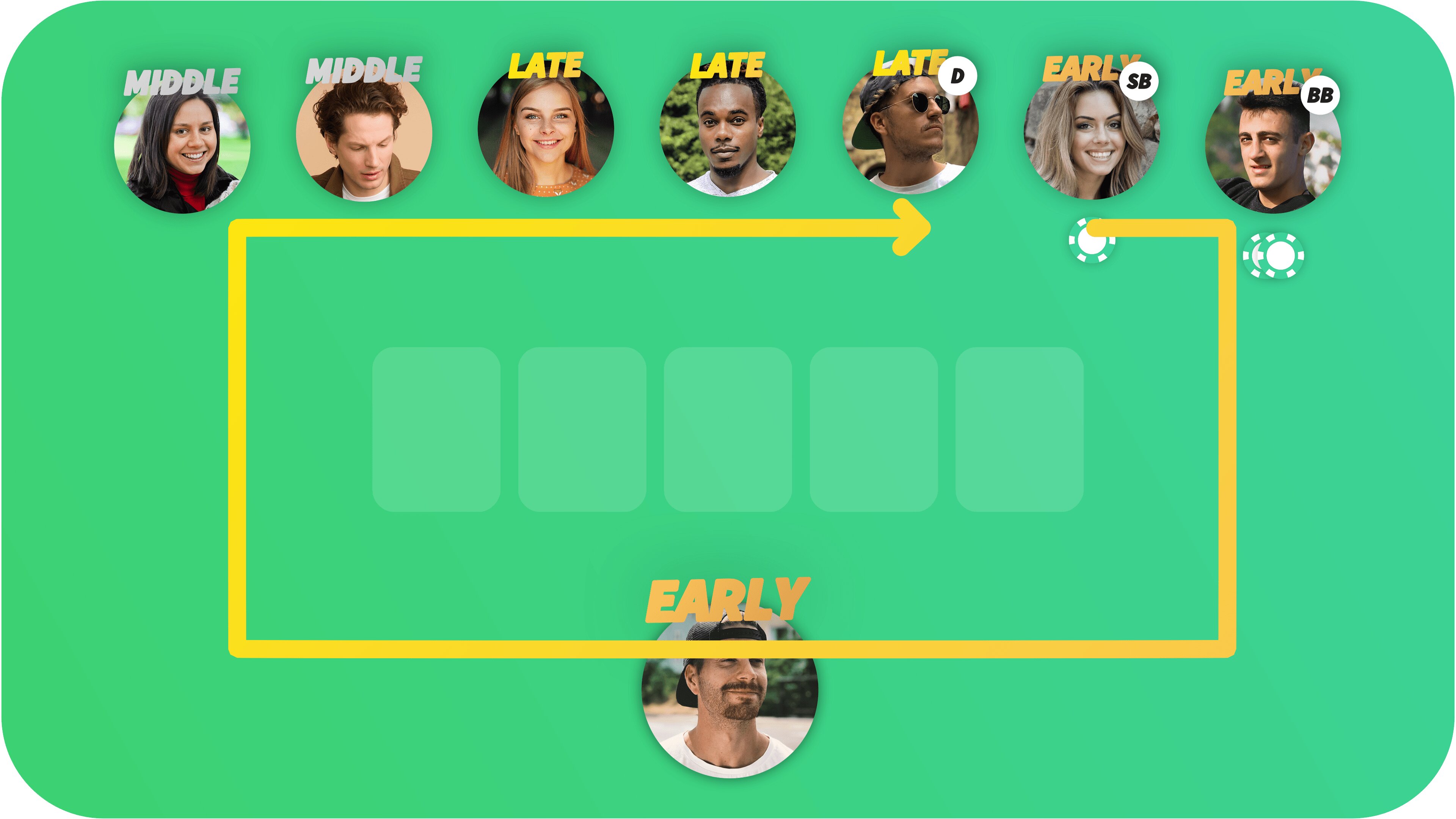
The later your position, the better. Since you get to see more players act before you, you get an idea of what they may have. The best position to be in is the dealer, also known as the button. In this position you get to act third last in the first round, and last for every round after that.
In general, the later your position, the wider the range of starting hands you should play. Position may not sound like a big deal, but skilled players know how much of poker strategy rests on it – and it’s a big part of what separates the playing styles from each other.
Limping in Poker
Limping is often called the most common beginner mistake, and it has a specific meaning: entering a pot before the flop by just calling the big blind, instead of raising or folding.
It costs you twice over. Raising gives you a chance to take the blinds there and then, without seeing a single community card, whereas limping almost never wins a pot uncontested. And calling cheaply invites everyone behind you into the hand, so you end up playing a mediocre holding against a crowd.
It also reads as weakness, and skilled players will turn up the heat with big bets once they spot it. The same goes for drifting passively after the flop – betting preflop and then meekly checking the flop tells the table you missed.
If your hand is worth playing, raise. If it isn’t, fold. Don’t limp.
We cover this and other expensive early habits in our guide to poker beginner mistakes.
Private Table Poker App
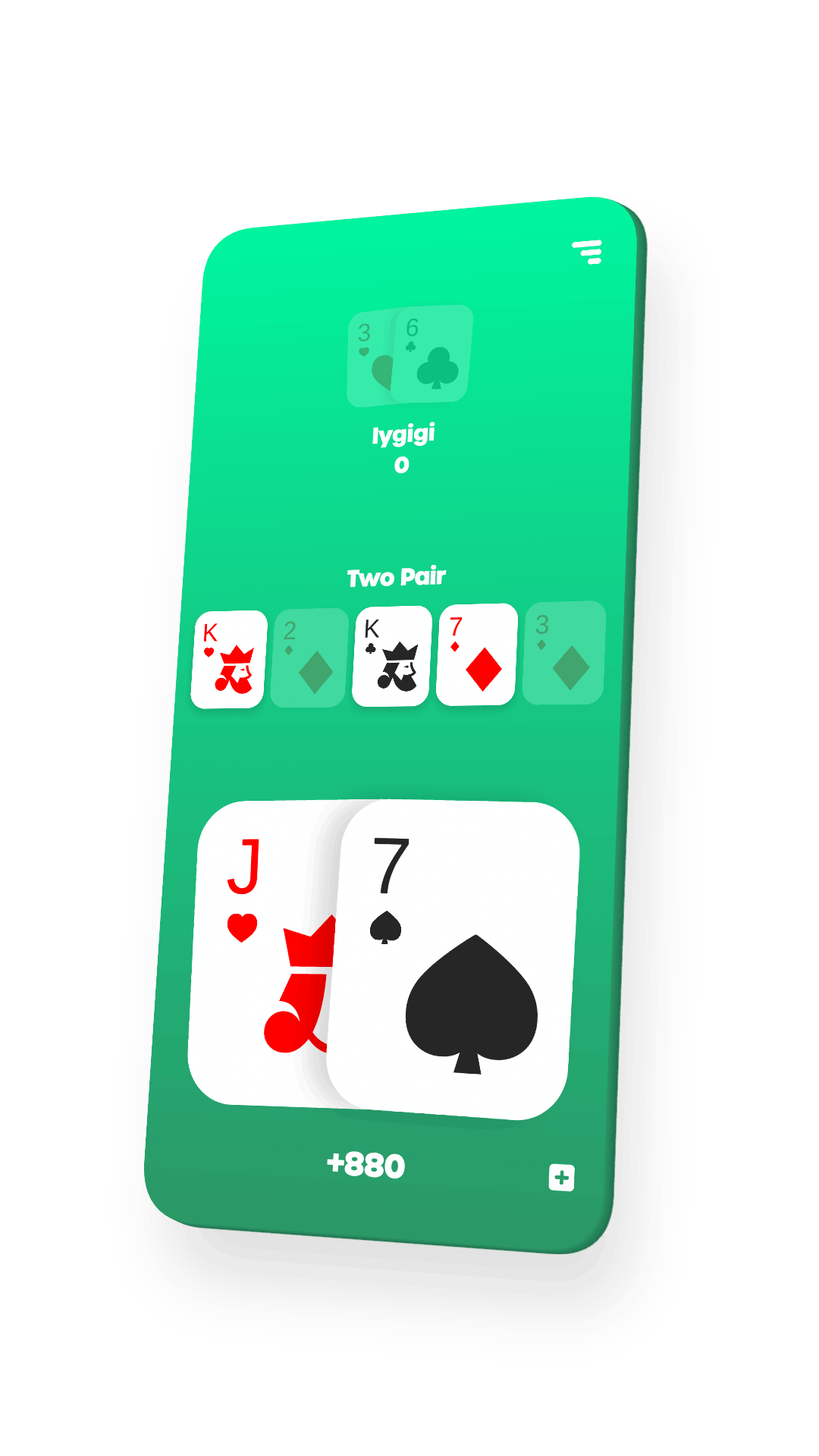
The best way to get good at poker is really just to play a lot. We’ve created the free EasyPoker app that works like a physical poker set, and we believe it’s the best poker app for friends.
Whether you’re sitting together or playing apart from separate locations, EasyPoker gives you that feeling of a good old physical poker night. The app handles everything for you, so all you have to do is play your cards and focus on your poker strategy.
Create a private table, share the 4-digit game PIN and deal. Texas Hold’em is free and unlimited, and no real money is involved – so it’s a cheap place to test a new strategy. For games with 4 or more players, the host needs EasyPoker Plus. The app also tracks your hands, so you can check your poker stats afterwards and see whether the strategy actually stuck.


More Poker Strategy
We’re constantly adding new and exciting content to our library. Here are a couple of other blog posts you may find interesting:
- Poker Tips for Beginners – five practical habits that help new players improve quickly.
- Poker Beginner Mistakes – what to avoid when you’re learning the game.
- Poker Playing Styles – tight, loose, passive and aggressive poker strategy.
- Important Poker Stats – VPIP, PFR, aggression factor and the stats behind your strategy.
Poker Strategy FAQ
What is poker strategy?
Poker strategy is the way you make decisions about which hands to play, when to bet, when to bluff, how to use position and how to adjust to opponents.
Is poker only luck?
No. Luck matters in single hands, but strategy matters over time. Better players make stronger decisions around betting, position, bluffing and hand selection.
What is a value bet?
A value bet is a bet made with a strong hand because you want worse hands to call and build the pot. It is deliberately small enough to be tempting, since shoving all in would only scare opponents into folding and leave you winning the blinds.
What is a blocking bet?
A blocking bet is a small bet made to keep the price of the hand low. By betting a little yourself, you discourage opponents from making a large bet, which lets you see the next community card cheaply when your hand still needs to improve.
How often should you bluff in poker?
Less often than films suggest. Bluffing works best against one or two opponents, because the more players in the pot, the likelier someone holds a hand worth calling with. Bluff to keep opponents guessing, not as your main way of winning pots.
Why is table position important?
Later position is stronger because you get to see what more players do before you act, giving you more information before making your decision. The dealer button is the best seat: you act last on every round after the flop.