Understanding the poker rules is crucial if you’re trying to get a game going. Poker is easy to learn yet hard to master, but there’s no reason to over-complicate the rules themselves.
This guide covers everything you need, and we’ve made a four-minute video too, so you don’t have to read unless you want to go deeper. The video is part of a six-part series on poker strategy, but you only need the first one for the rules.
Poker Rules Explained – Video
Texas Hold’em Poker Rules
“Poker” isn’t one game but a whole genre of card games. Texas Hold’em is by far the most popular, and probably the one that brought you here after watching Casino Royale, playing Red Dead Redemption or binging Kakegurui – all great reasons, by the way.
Texas Hold’em is usually played by 2–12 people sitting around a table. You start by choosing who deals the first round, a role that then passes clockwise after every hand. But how do you decide who deals first?
Who Is the First Dealer in a Game of Poker?
This is usually decided by ‘dealing to the first ace’. So, one of you picks up the deck of cards, and starts dealing a card to each player, for everyone to see. The first person to be dealt an ace will have the honor of being the first dealer of the game. This is not a part of the official poker rules, but it’s how most home games do it.
Being the dealer of a round is usually considered a positive thing, since this means you get to act last – after watching all other players act their turn. More on this in our blog about playing poker in position.
Basic Poker Rules
After shuffling the deck, the dealer gives every player two cards face down. You look at your own, but keep them secret.
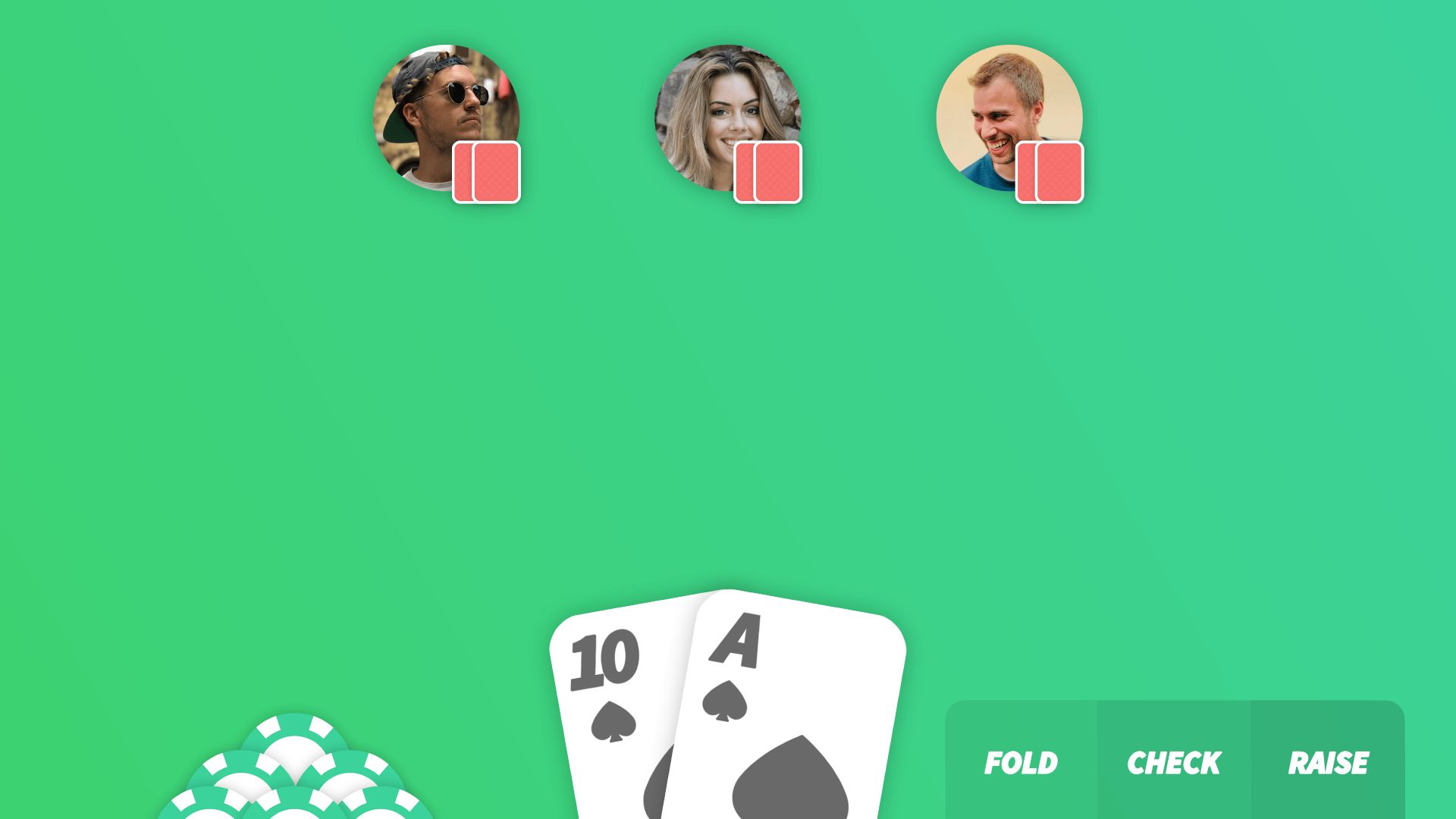
The essence of poker is that you then bet on whether your hand is the best or not, with the action moving clockwise around the table. Bad feeling about your cards? Fold – you give them up and sit the rest of the round out. Feel good about them? Bet, and how much is up to you.
When someone bets, they raise the cost of staying in, so everyone after them has to match that bet or fold. Once every player has acted, the chips are gathered into the pot: the prize for winning the round. And to make sure every hand has something worth playing for, poker uses two forced-bet roles – the small blind and the big blind.
Small and Big Blind
What do the small blind and big blind actually mean? This is often the part of the poker rules that confuses beginners most, but it’s simple enough: the player sitting after the dealer is the small blind, the next one along is the big blind, and like the dealer role, both move clockwise after every round.
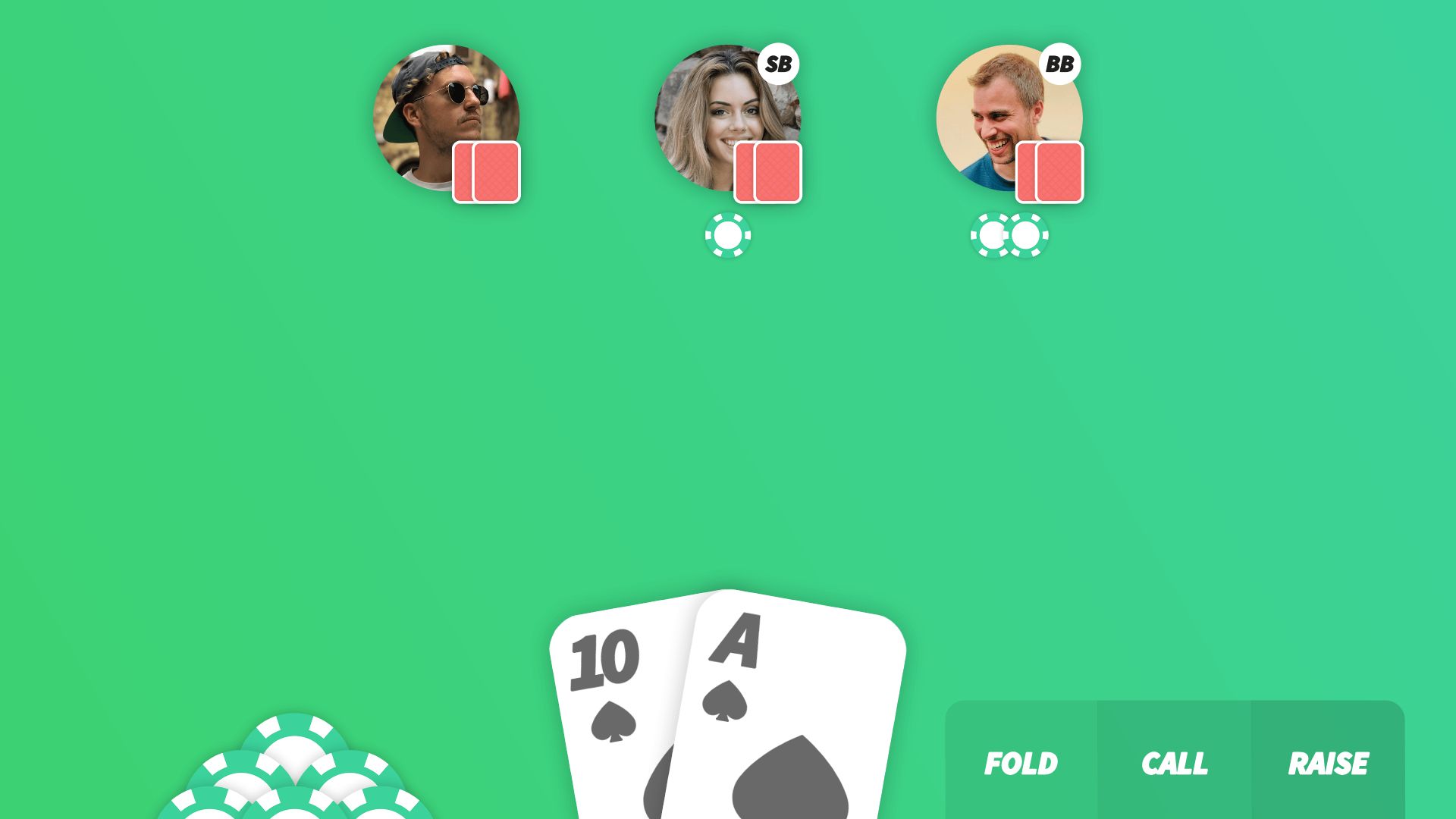
Both are required to bet a predetermined, usually small amount – say 10 and 20, with the big blind always double the small blind. Blinds exist so that every round of poker matters and there’s always something to be won, and they double as a gentle push for players who otherwise wouldn’t put chips in.
What Are Community Cards?
So the essence of the rules is that you’re dealt two cards and bet on whether they’re the best at the table. On its own that would get predictable fast – deal someone a pair of aces and they’d be near certain to win.
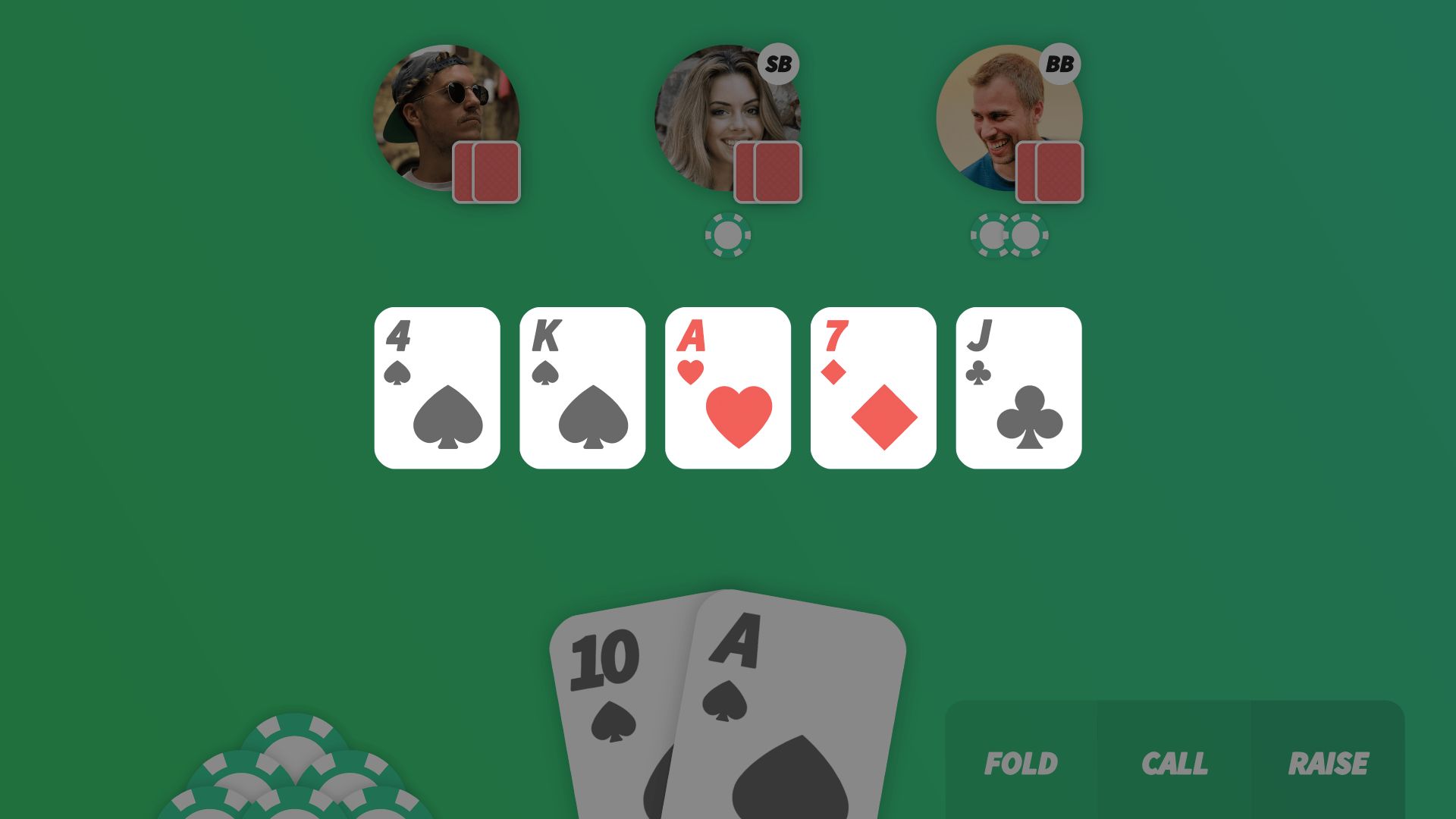
That’s why a full round of poker adds another five cards, drawn from the deck and placed face up on the table for everyone to see. These are the community cards, and they’re what makes poker unpredictable. Your final hand is the best five-card combination of the two cards you’re holding and the five on the table.
The cards in your hand are yours alone, but the community cards belong to everyone, and several players can use the same ones at once. Occasionally your best hand won’t involve your own two cards at all, if the board makes a straight by itself. And to keep the twists coming, the community cards don’t all arrive together – they come as the flop, the turn and the river.
What Is the Flop?
Once every player has made their first choice to bet or fold and the chips are in the pot, three of the five community cards are drawn and placed on the table. Those first three are called the flop.
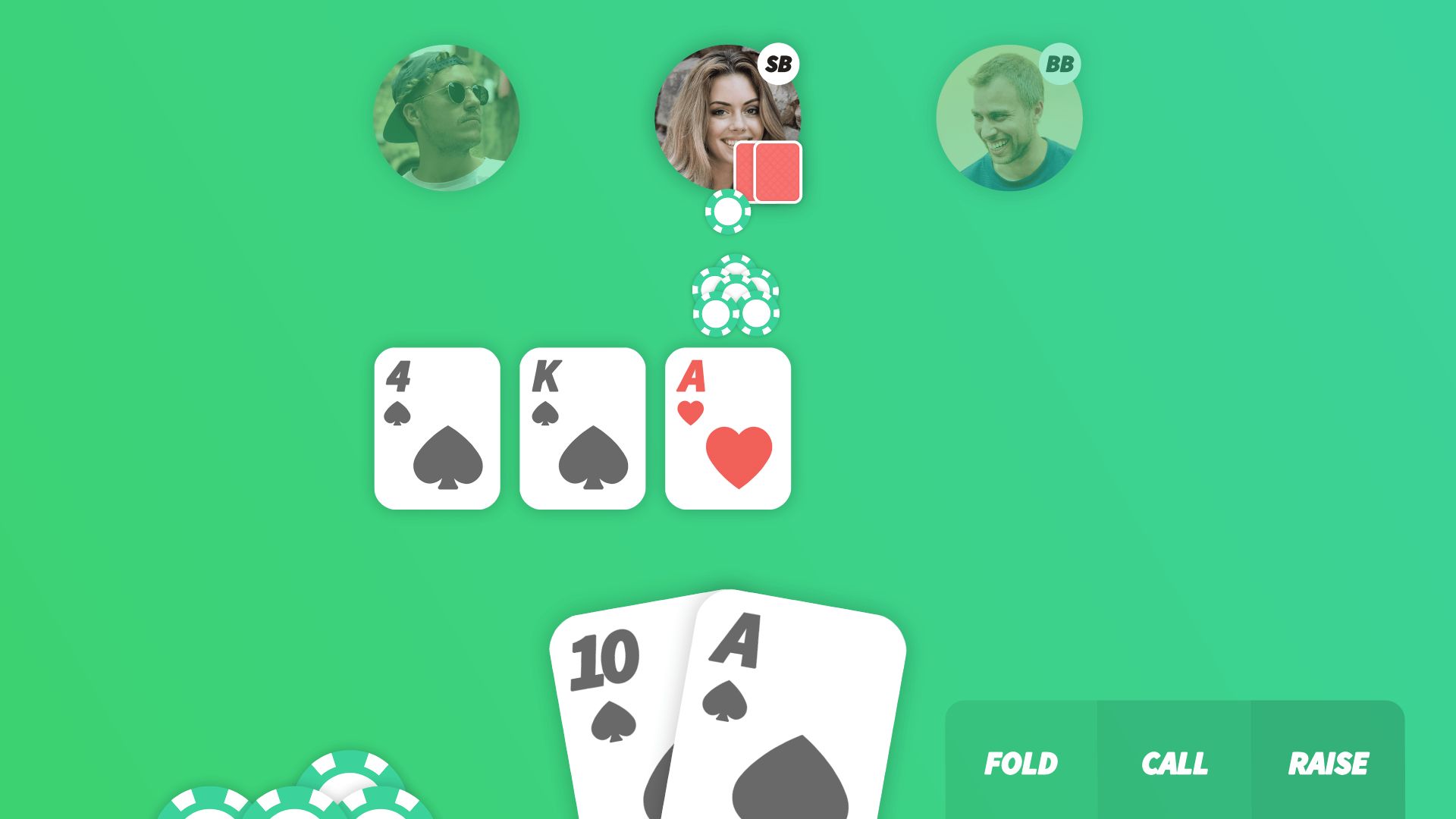
After the flop comes another betting round, where players can bet, fold or check. Checking means moving on without betting, and it’s only available if nobody before you has bet in that round. If any remaining player does bet, everyone else has to match it or give up their cards.
So if you check and the player after you bets, you then have to choose whether to call or fold before the round can continue. Note that the small and big blinds are not forced to bet anything after the flop – that only applies to the first round of a hand.
What Is the Turn?
When all remaining players have acted, and assuming two or more are still in the hand, a fourth community card is drawn and placed alongside the first three. This one is called the turn.
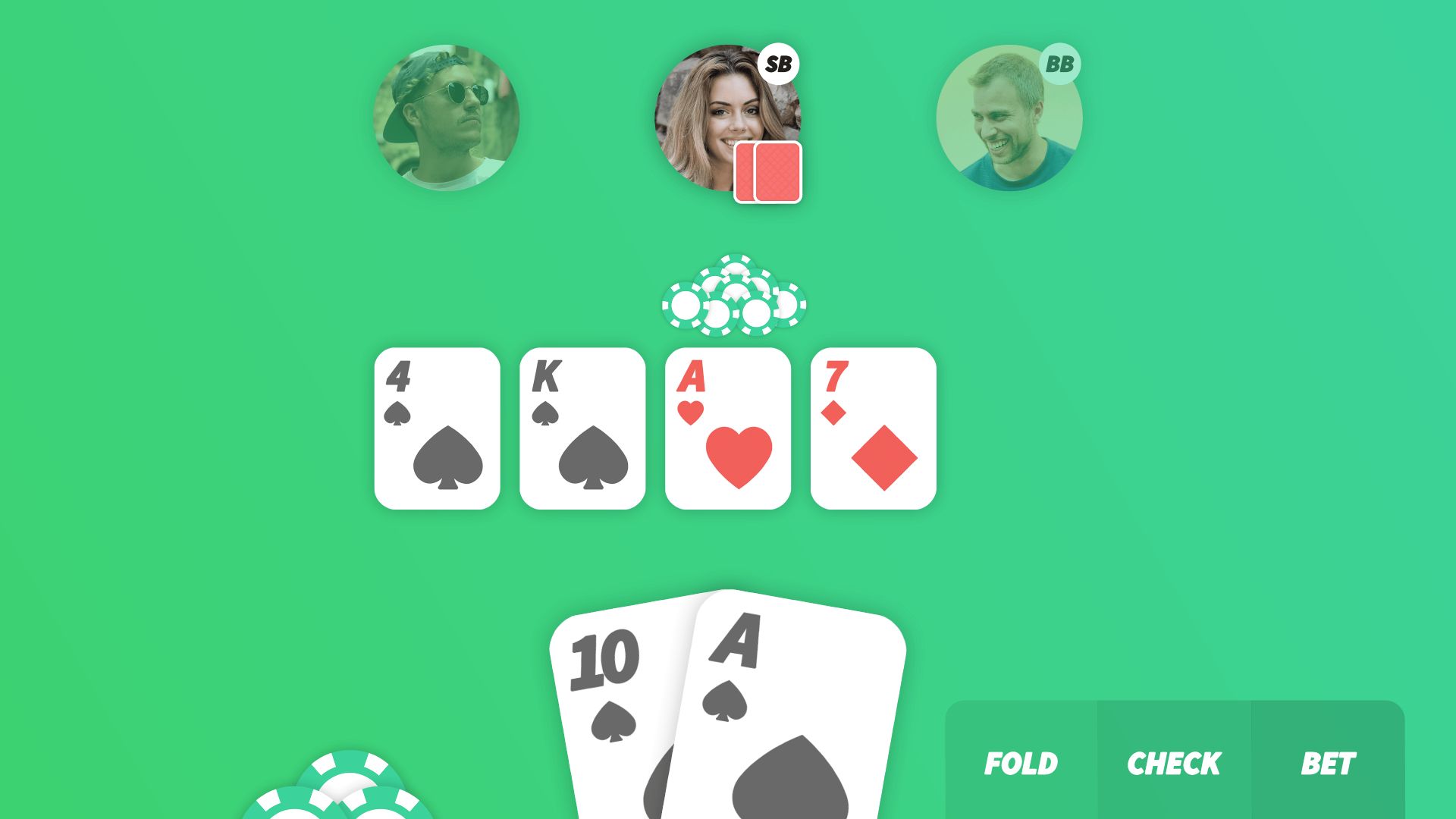
From there it’s exactly the same procedure as after the flop: the remaining players check, bet or fold, and then the fifth and final community card is drawn.
What Is the River?
The river is the fifth and final community card, and all players now know what 5 cards make up their final hand.
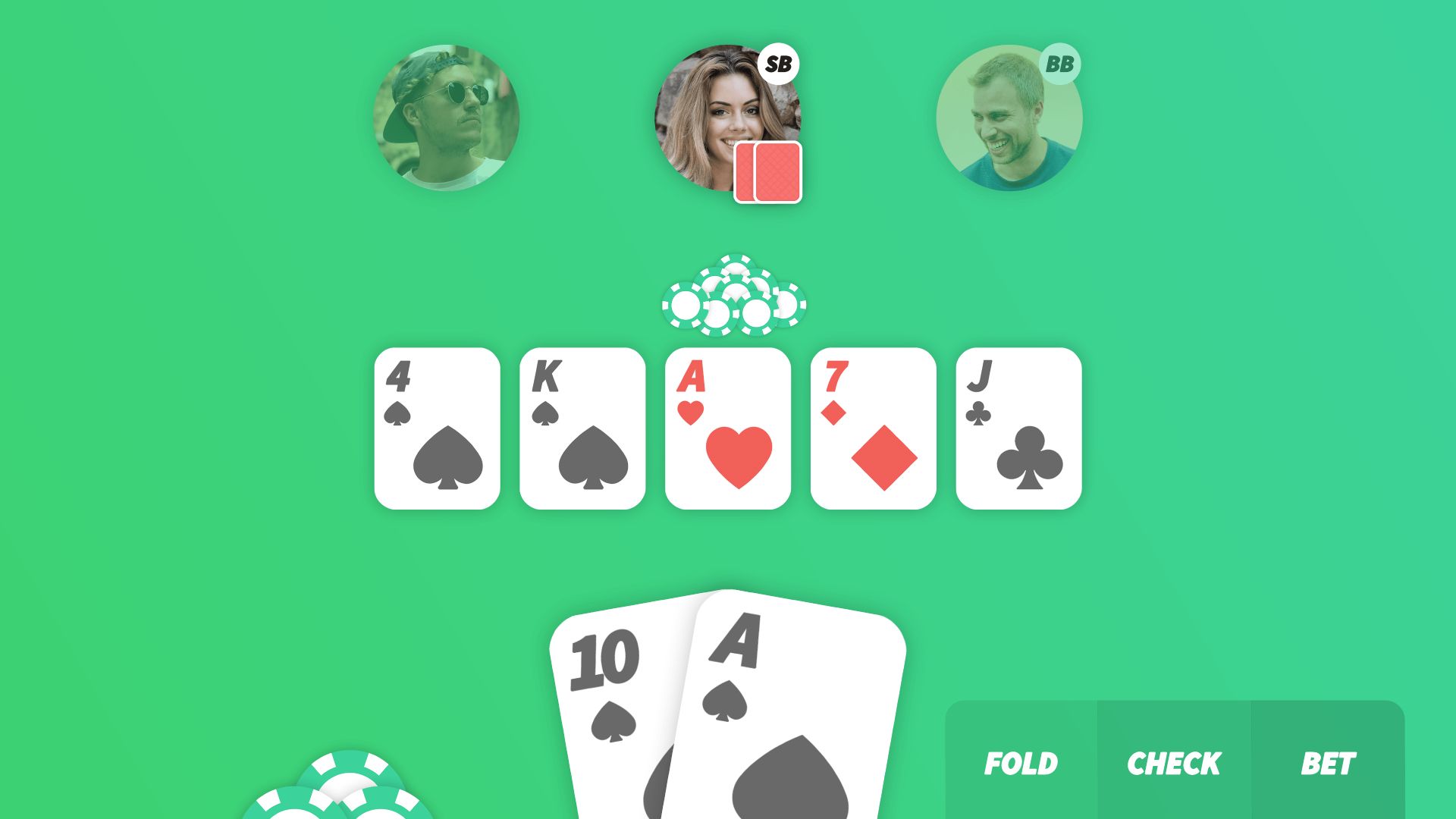
A last round of checking, betting and folding follows. After that we finally get to see who wins, as the remaining players show their cards in what’s called the showdown.
Showdown in Poker
When the last action is done, players lay down their two cards and show everyone what they’ve got. At a home game you can do that in whatever order you like, but the official rules say the showdown follows the same order as the betting round did.
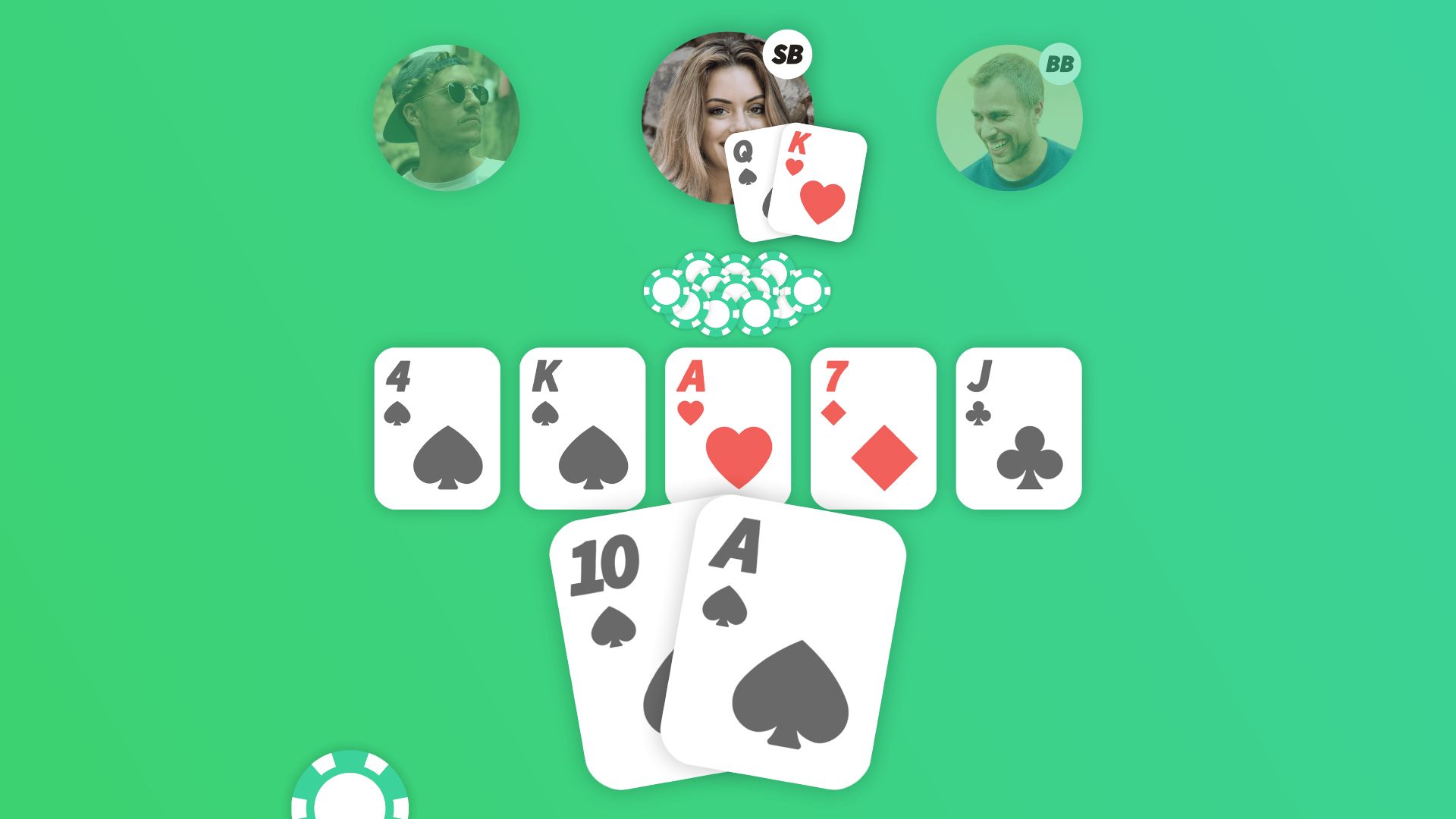
The player with the best five-card combination of the two cards in their hand and the five on the table wins the round and collects the pot. If two or more players hold the exact same hand, they split it evenly. In the example above the winning hand is a pair of aces, with a king, a jack and a ten as kickers.
What Are the Different Poker Hands?
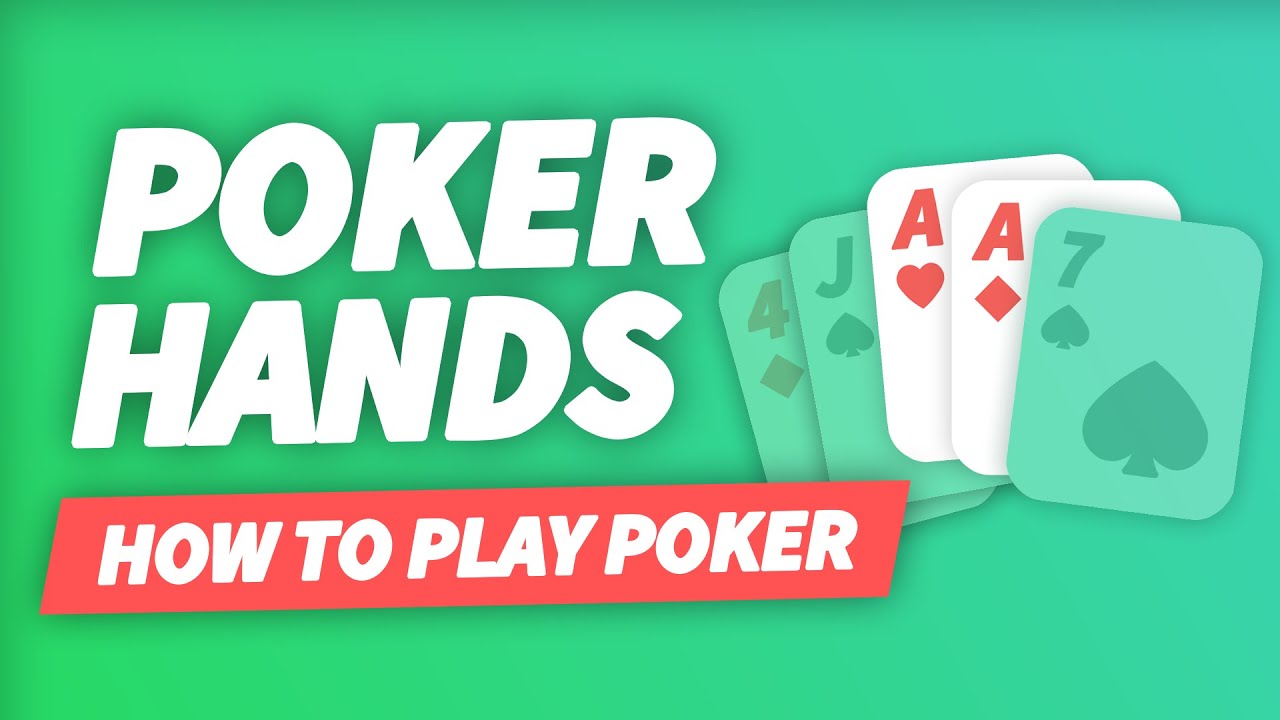
There are ten different poker hands to make. Here’s a video explaining what beats what, and the full ranking is written out in our guide to poker hands.
A Digital Poker Set
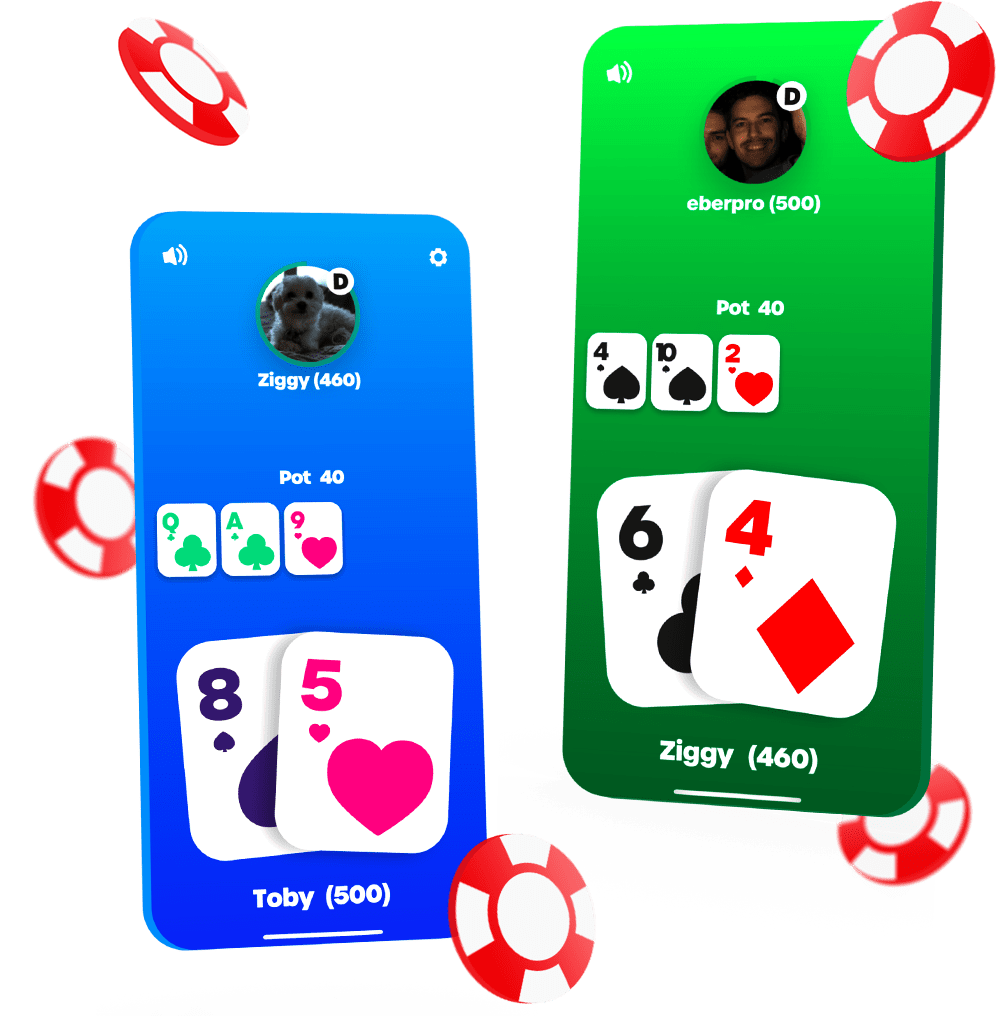
If you and your friends are new to poker and just want to play and learn, try our free EasyPoker app. It runs the whole poker night for you, so you don’t need chips, cards or even a table – create a private table, share the 4-digit game PIN, and the app shuffles, deals and counts the chips.
It’s free, simple enough to pick up in a minute, and there’s no real-money gambling involved. Texas Hold’em is free and unlimited. For games with 4 or more players, the host needs EasyPoker Plus.
More Poker Rules & Content
So now you know the poker rules and you’re ready to play. Ready for “all in”, “pocket aces” and “flipping the nuts” – but what does any of that actually mean? Prepare for your next poker night by reading up on some poker lingo, then work on the parts that actually win pots: how to bet and how to bluff.
Poker Rules FAQ
What are the basic poker rules?
In Texas Hold’em, each player gets two private cards. Players bet in turns, five community cards can appear on the table, and the best five-card poker hand wins the pot.
How many cards do you get in Texas Hold’em?
Each player gets two private cards. Those cards can be combined with the five community cards to make the best possible five-card poker hand.
What are the flop, turn and river?
The flop is the first three community cards. The turn is the fourth community card. The river is the fifth and final community card.
What is showdown in poker?
Showdown is when the remaining players reveal their cards after the final betting round. The strongest five-card hand wins, unless players tie and split the pot.
Can EasyPoker help beginners play poker?
Yes. EasyPoker gives you digital cards, chips and private tables, so you can focus on learning poker rules with friends instead of setting up a physical poker set.