Being thoughtful of poker playing style is a fast way to get better at poker whether you’re a skilled player or a poker beginner. Things like bluffing and betting become a lot easier when you get a read on your opponent’s playing style.
No player fits perfectly into just one of the playing styles. It’s more fluent than that. Players may switch between playing styles if they get bored, or if they are really talented and use the switch to set a trap for you.
If you’d rather watch than read, this entire post is condensed into a five-minute video. The text version continues underneath it.
What Is Poker Playing Style?
Some players bluff a lot, others are more reluctant. Some players are always a part of the action, while others play fewer hands. This all comes down to a player’s playing style.
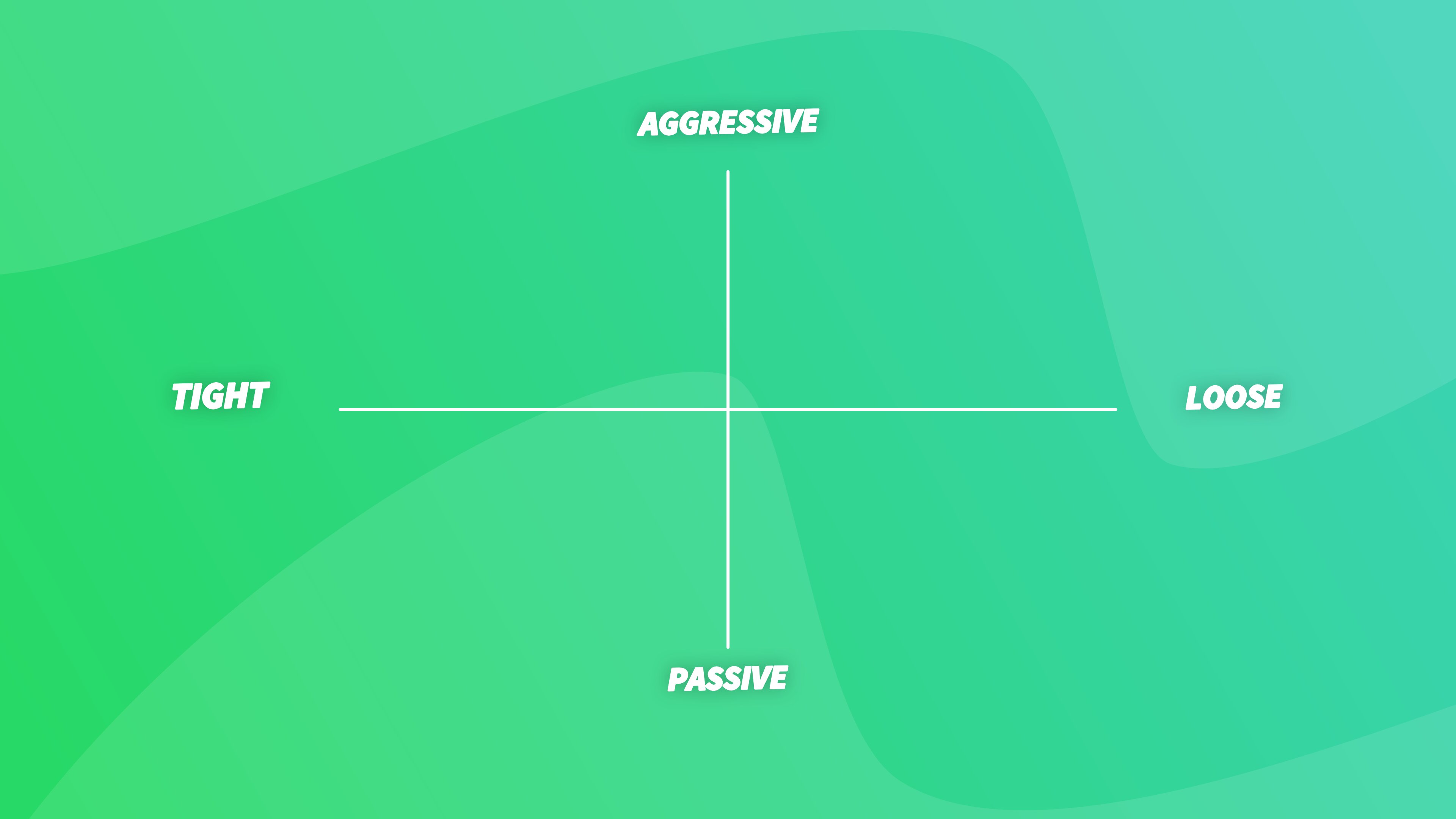
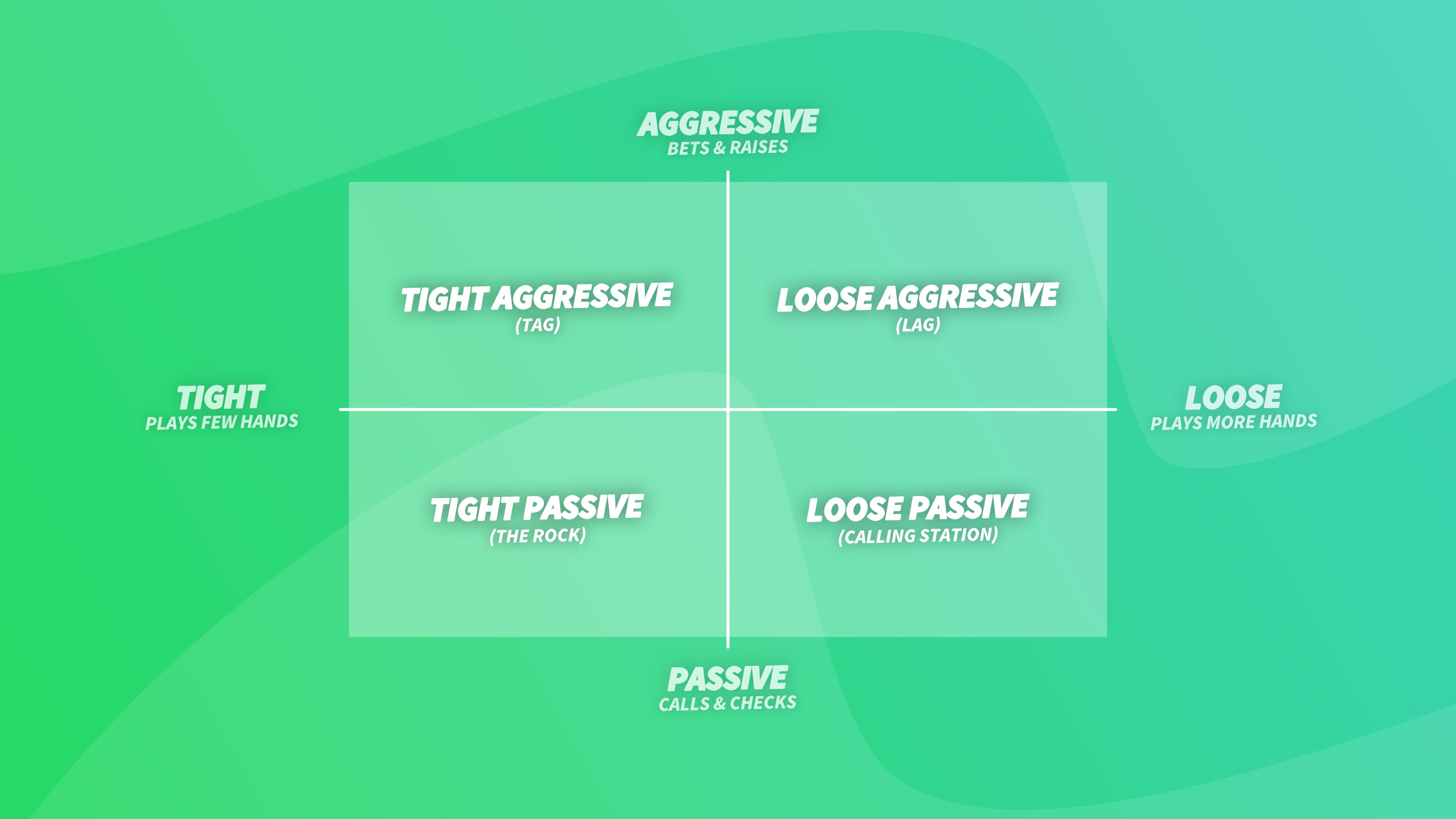
A poker playing style is determined by how many different starting hands you’re willing to play, and how aggressively you play them. To categorize the different playing styles, we use a simple chart: tight versus loose, and passive versus aggressive.
Tight Playing Style vs Loose Playing Style
On the far left of the chart, we have tight. Tight players only play a very narrow range of starting hands. They are in no rush, and they don’t mind waiting for a perfect hand. This means they’ll often fold their hand preflop.
Loose, on the other hand, means you’ll play a wide range of starting hands. This is the type of player who gets bored easily and wants to take part in everything.
Passive Playing Style vs Aggressive Playing Style
At the bottom of the chart, we have the passive player. This player doesn’t like to come off too strong. They prefer checking and calling, in an effort to see what their cards may turn into with the right community cards. But they stay away from confrontation.
Aggressive players are quite the opposite. They play their hands with conviction and prefer to bet or raise. They feed on the tension and prey on other players too tight to call their crazy actions.
The Four Different Poker Playing Styles
This creates four different poker players, and those are what we refer to when we talk about the different poker playing styles.
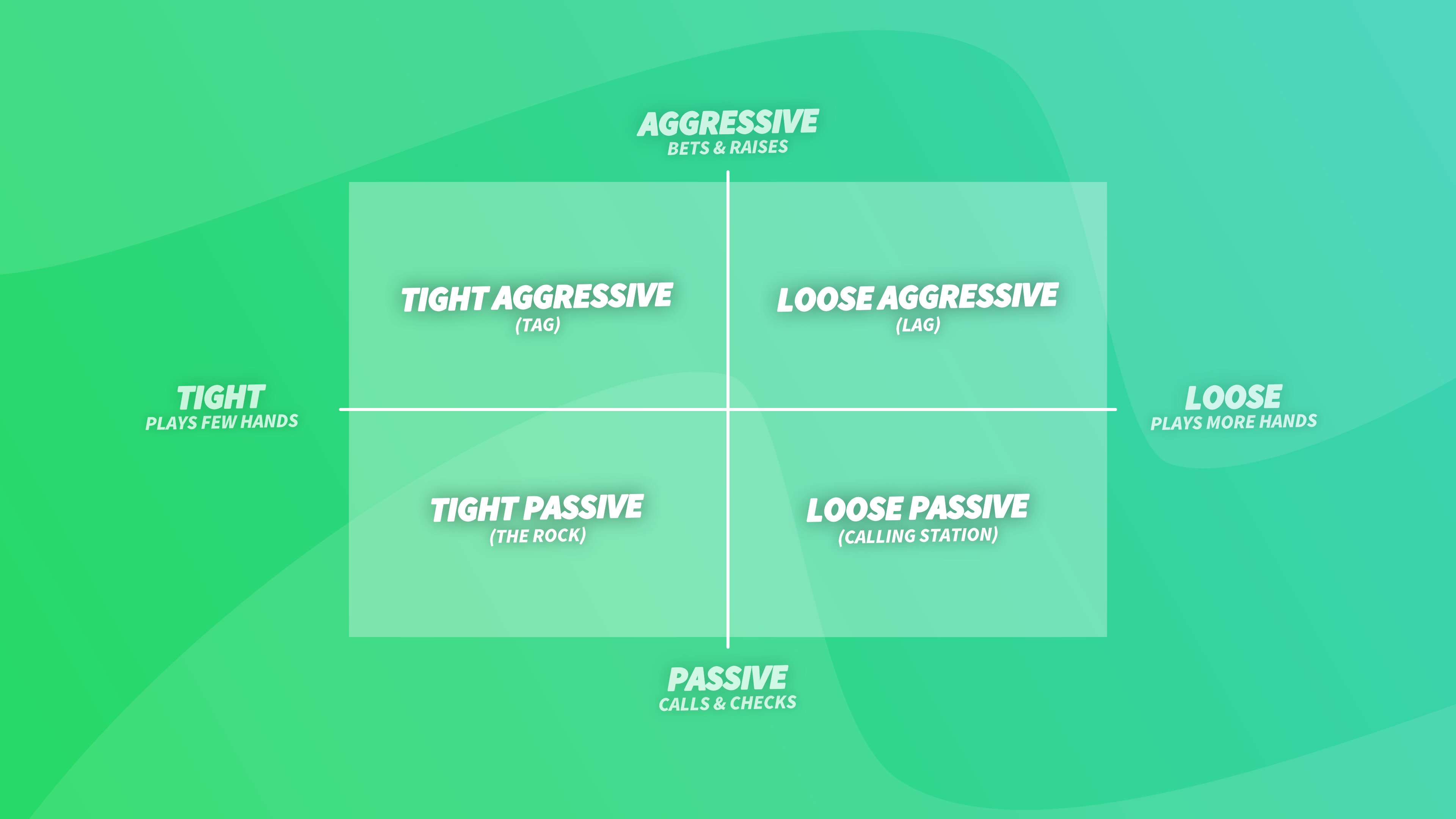
Each style has pros and cons. Some are more efficient than others, but you’ll often find all four types around your table. Let’s have a closer look at each of the different playing styles, and how to beat them.
Loose Passive Poker Playing Style
This is a common beginner’s choice of playing style, and perhaps the worst one. Loose passive players play a lot of the hands they are dealt, but they don’t do much with them. They just check and call.
For this reason, they’re often referred to as a calling station. Since they have money in every round but play it slow, they often end up losing all of their chips in a hurry.
Preflop, this shows up as limping – calling the big blind rather than raising or folding, which is one of the cardinal sins of beginner poker. The hands you choose to play have to be played with conviction. Loose passive players take part in all the action early in the night, then spend the rest of it as spectators with no chips.
Don’t be a calling station. And when you’re facing one, stick to your strong hands and value bet them relentlessly. Don’t bother bluffing – they’ll happily call anything.
Tight Passive Poker Playing Style
This player has a more conservative and boring approach to the game. Unlike the calling station, these players are tight, meaning they only play a narrow range of the hands they are dealt. They’ll happily fold hand after hand preflop, waiting for that perfect hand.
And when they do get their golden hand, the passive side to them means they usually just check or call. So even if they win the hand, it’ll often be a small pot.
The risk-averse approach to the game has earned this playing style the nickname rock. Since they just sit there, without doing much.
They may get more time at the table than a calling station, but eventually they’ll bleed out from the blinds. When facing a rock, pay attention to the times when they are small or big blind. You have a great chance to steal some blinds by placing a bet preflop, because they’ll fold their blinds way too often.
Tight Aggressive Poker Playing Style
Often shortened to TAG, this playing style is generally considered the most effective. It’s also the playing style most professional poker players use, at least as a baseline.
As tight players, they only play a narrow range of the starting hands they are dealt. They sit patiently, waiting for the right hand. But when that hand comes along, unlike the rock, a tight aggressive player will pounce and attack with force by betting or raising.
They are often called sharks, because they patiently circle around the pot until the perfect time to attack.
Their tight playing style makes them fairly easy to read. If they have something, they’ll be aggressive. So when a shark suddenly slows down and starts checking or calling their way to the next card, that’s the moment to put in a raise – the passivity usually means they missed.
Loose Aggressive Poker Playing Style
Loose aggressive players are the maniacs, the entertainers, and the players that make poker worth watching. Their loose approach means they play a wide range of starting hands and take part in most hands. And they play aggressively with lots of bets and bluffs.
These players are nearly impossible to read, but the playing style also comes with great risk. You either win big or lose big.
There’s no denying it’s thrilling to watch. Think of players like Stu Ungar, Doyle Brunson and a firm favorite of ours, Gus Hansen.
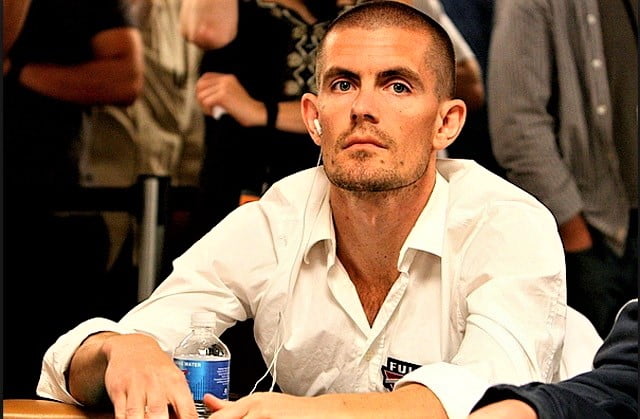
When facing a loose aggressive player, you’d be smart to take the tight aggressive approach. Lure them into a trap and have them build a huge pot for you to steal from under them.
What’s the Best Poker Playing Style?
So, the million dollar question is of course: what’s the best playing style in poker?
First, it’s important to note that no player fits 100% into just one category. It’s fluent and you probably find yourself somewhere between. You may also switch between different playing styles during a game. A tight player may turn loose if bored, and vice versa.
You’ll see a lot of new players take a passive approach before understanding the strategy and mechanics of the game. But there is no doubt that an aggressive approach is the most effective, as long as you pick the right times to be aggressive.
As a rule of thumb, look to bet, raise or fold rather than drifting along with checks and calls. There are plenty of spots where checking is correct – you just don’t want it to be your default answer.
Most players practice a tight aggressive playing style, and that is probably the most efficient and winning of the four. Although the loose aggressive playing style is the one that produces the most poker icons and legends.
The best poker playing style seems to be switching between different styles. Stick to aggression, but fake a passive play to set a trap once in a while. That’s the best strategy to win at poker.
Practice Your Poker Playing Style
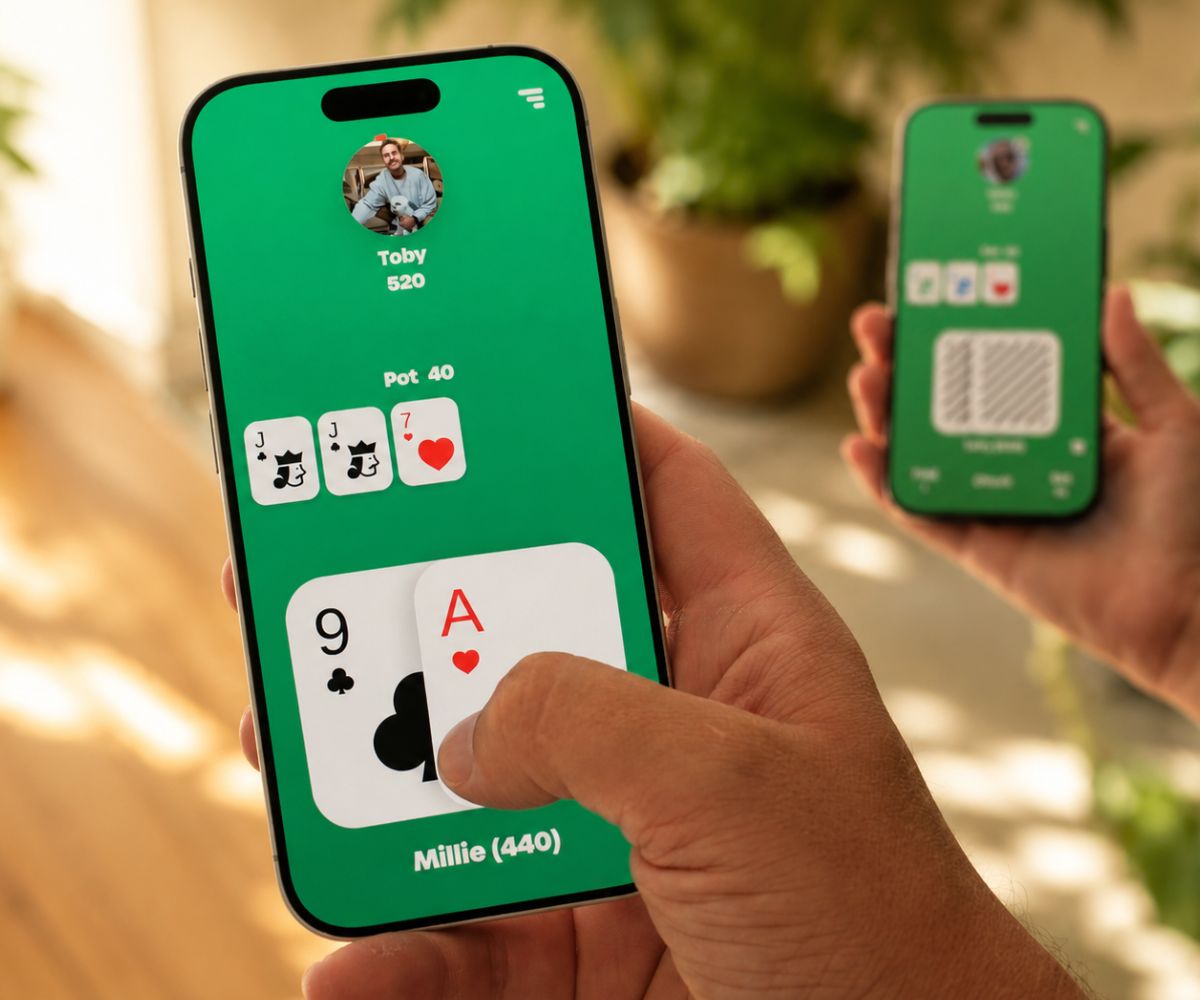
If you and your friends want to practice your poker skills and experiment with different playing styles, our app is built for exactly that. The free EasyPoker app works as a digital version of a physical poker set: create a private table, share the 4-digit game PIN, and it handles the cards, chips and dealing.
We think it’s the best app to play poker with friends, whether you’re physically sitting together or playing online from separate locations.
Texas Hold’em is free and unlimited, and no real money is involved – which makes it a cheap place to find out whether that loose aggressive style really suits you. For games with 4 or more players, the host needs EasyPoker Plus. The app also tracks your hands, so you can check your poker stats afterwards and see which style you actually played.


More Poker Strategy
We try to build the best online library of easy-to-understand poker tricks and tutorials. If you like this guide on poker playing styles and want to dive deeper into poker strategy, take a look at one of these:
- Poker Tips for Beginners – five practical ways to play smarter from the start.
- Poker Beginner Mistakes – the expensive habits new players should avoid.
- Important Poker Stats – VPIP, PFR, aggression factor and the numbers behind your style.
- Poker Hand Rankings – learn what beats what before you start building a strategy.
Poker Playing Styles FAQ
What are the four poker playing styles?
The four common poker playing styles are loose passive, tight passive, tight aggressive and loose aggressive. They are based on how many hands a player plays and how aggressively they play them.
What is tight aggressive poker?
Tight aggressive poker means playing fewer starting hands, but betting or raising strongly when you do enter a pot. It is widely considered one of the most effective poker styles.
What is loose passive poker?
Loose passive poker means playing too many hands while mostly checking and calling. This style is often called a calling station and is usually expensive over time.
What is the best poker playing style?
A tight aggressive style is usually the strongest baseline, but the best players can adjust and switch gears when the table changes.