Don’t play the cards, play the people. That’s one of the most important mantras in poker, and a good bluff beats bad cards more often than beginners expect. There’s one major exception: cheaters beat everything, right up until they get caught.
Below we take a look at three of the ways people cheat at poker, how each one gets spotted, and why it’s a bad bet even when it works. This is a guide to recognizing cheating at your own table, not a how-to.
Marked Cards
Marking cards means altering the deck so the backs give away what’s on the front. Once someone knows the code, they’re effectively playing with everyone’s cards face up. Marks are usually bends, dents, scratches or tiny nicks along an edge, so the condition of the deck is the thing to watch – a pack that’s picked up damage in one specific corner is worth a second look.
In a casino, marked cards are hard to get away with. Dealers change decks constantly and the overhead cameras are trained on exactly this. Hard, though, isn’t impossible. British press reported that a Romanian player, Mihai Lacatos, used card-marking to take casinos for substantial sums over a period of years, including roughly $50,560 from the Playboy Club in Mayfair, London in a single week. He was arrested in March 2014 and reportedly continued while on bail.
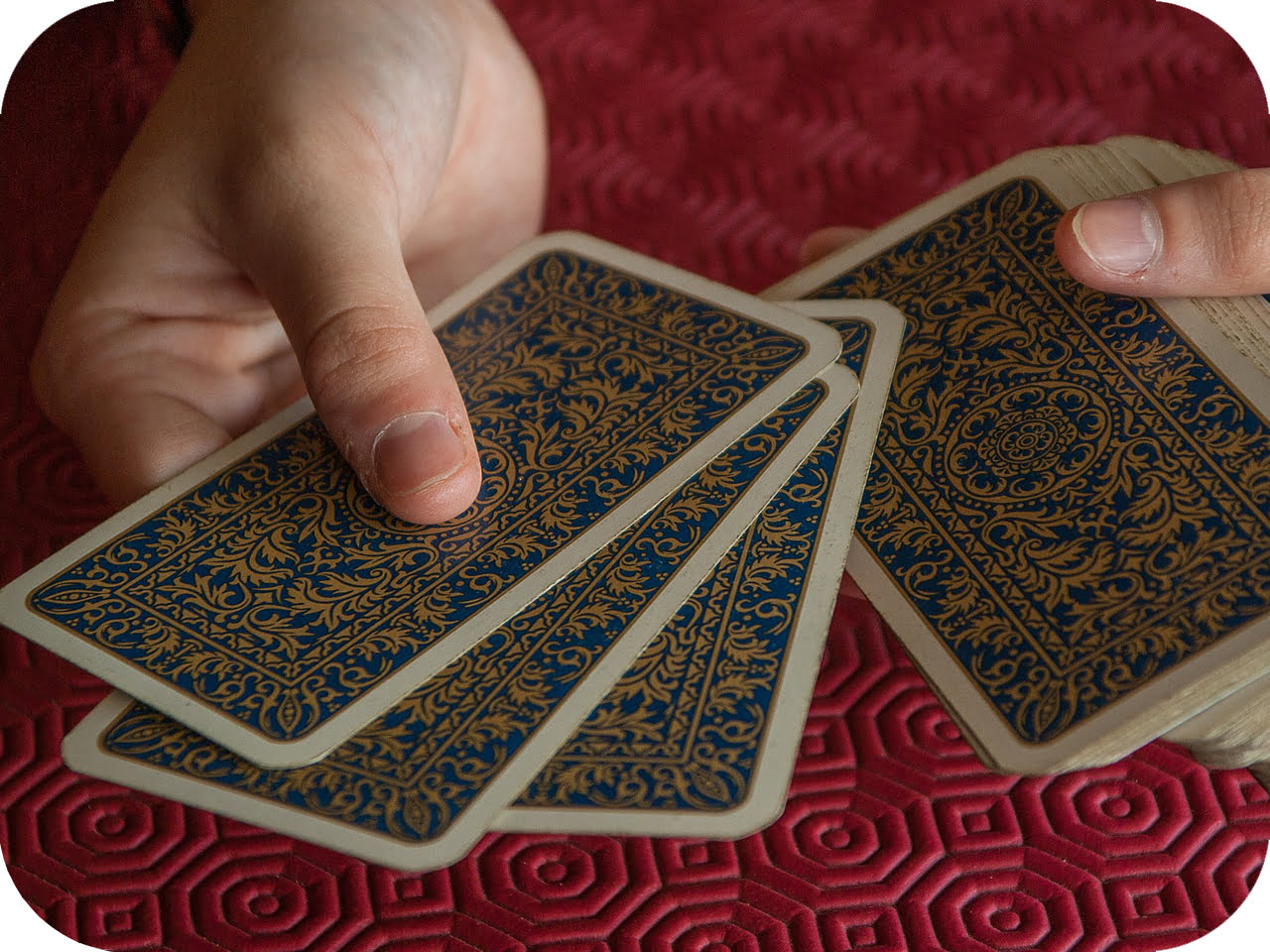
Marked cards turn up far more often in private games – home games, backyard games, the weekly kitchen-table sessions. There’s no dealer swapping in a fresh deck every twenty minutes, and everyone assumes everyone is a friend. As the old line goes, if you can’t spot the sucker at the table, you’re probably it.
Poker Bots and Superusers
There’s nothing new about cheating at poker. When the game went digital, the cheating followed. The most notorious case is the UltimateBet scandal of the late 2000s, where certain accounts could see every player’s hole cards – a so-called superuser account.
Investigators at the Kahnawake Gaming Commission, which licensed the site, concluded that former WSOP champion Russ Hamilton was the person principally responsible, and the site was ordered to repay millions to affected players. Hamilton was never criminally charged, in part because the law around online cheating was badly defined at the time.
Bots are the other digital problem. Rather than seeing hidden cards, a bot simply plays the maths better than a person can, folding, calling and raising according to statistics without ever getting tired, tilted or curious. Against a decent bot, a human is playing a losing game from the first hand. Keep an eye out for any account calling itself Skynet.
This is the real trade-off with playing strangers online: if you can’t see someone, you can’t read them, call their bluff, or notice that they never once deviate from optimal. Convenience comes at a cost, and sometimes the bot walks off with the pot.
Bottom Dealing and Collusion
Teaming up in poker isn’t rare. Friends sometimes soft-play each other, going easy to avoid a big pot between them. It’s unethical and most rooms forbid it, but it isn’t a crime.
Bottom dealing is a different matter. It’s a sleight-of-hand move where the dealer keeps the good cards on the bottom of the deck and deals from there when it suits a partner – a stacked deck disguised as a normal one.
It takes a dealer who doubles as a card mechanic, making a stacked shuffle look random. It’s a dying art in casinos, because it’s exactly what the cameras are there to catch, but it survives in home games where one person deals every hand. Rotating the deal, and the dealer button, is the simplest defense there is – and it’s how the game is meant to run anyway, as our guide to how to play poker explains.
Why Not to Do It
The title of this post promises a reason, so here it is. Cheating at poker for money isn’t a clever edge, it’s fraud, and in most places it’s prosecuted as theft or deception rather than treated as a gaming dispute. Casinos ban and pursue people. Online sites keep every hand history you’ve ever played, which means patterns that no human would notice at the table show up clearly in the data later.
The bigger cost is closer to home. Almost everyone reading this plays with friends, and a home game only exists because everyone trusts everyone else with the deck and the chips. Get caught marking a card in that room and the game doesn’t just end for the night, it ends. Nobody unwinds that.
And the maths never justified it. The edge you get from playing well compounds quietly for years with none of the downside. If you want more of your friends’ chips, our guides to poker strategy, how to bluff and poker tips for beginners will get you further than any sleight of hand, and you get to keep the game.
A Deck Nobody Can Touch
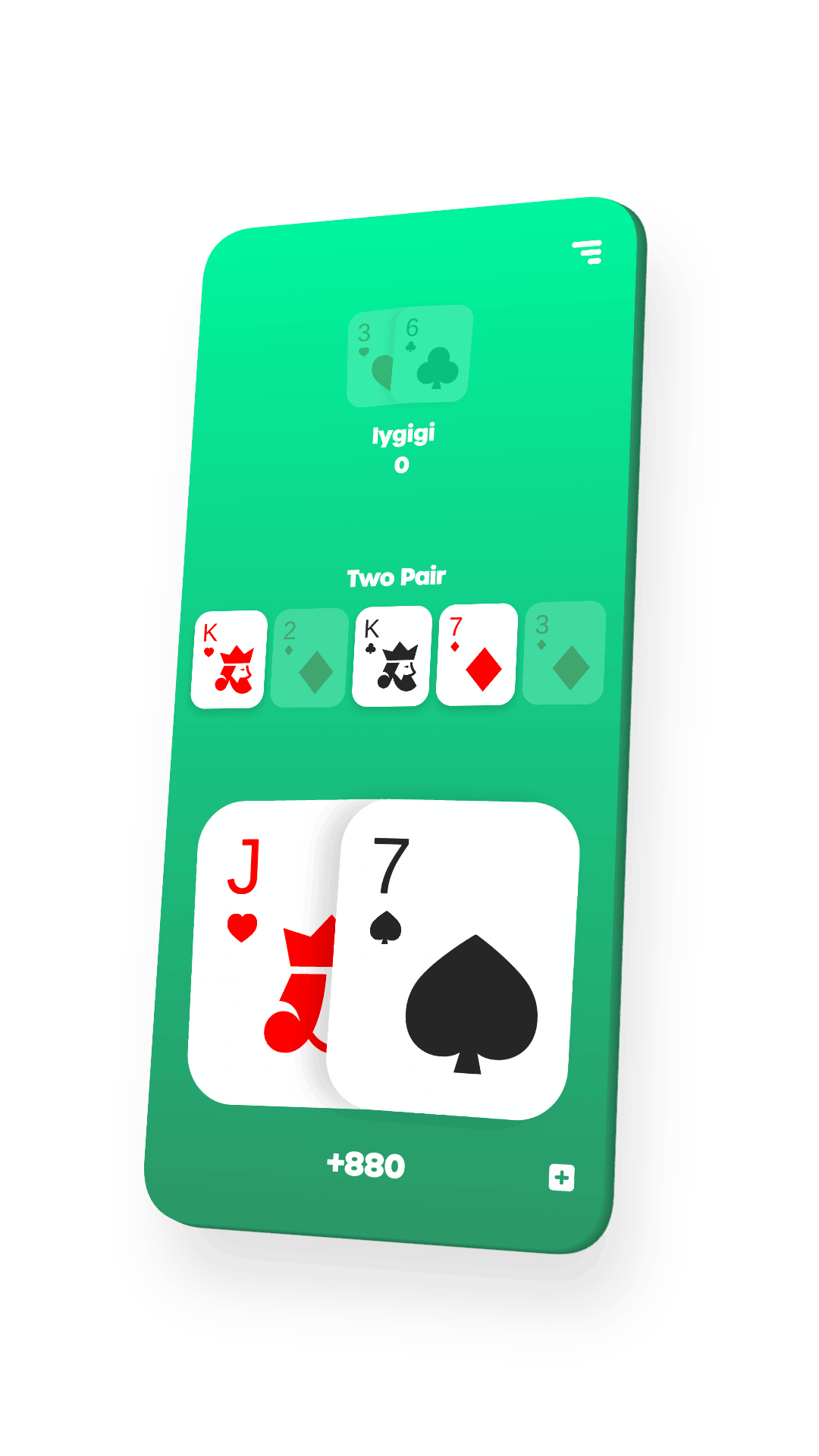
Most of the cheating above depends on physical access to the cards or to a poorly policed online table. An app removes both. EasyPoker deals every hand digitally, so there’s no deck to mark, no bottom to deal from, and nothing to palm. The chips count themselves too, which quietly ends the other classic home-game argument.
You still get to bluff, of course. EasyPoker deals Texas Hold’em, Omaha, Short Deck (6+) and Reverse Hold’em on a private table only your friends can join, so the only thing anyone can get away with is a good story about their hand.


Cheating in Poker FAQ
What are the most common ways to cheat at poker?
The three you’re most likely to run into are marked cards, where the backs of the deck are altered so one player can read them; collusion and bottom dealing, where a dealer stacks the deck for a partner; and online bots or superuser accounts, where software either plays better than any human or sees hidden cards outright.
How do you spot marked cards?
Watch the condition of the deck rather than the players. Marks are usually bends, dents, scratches or small nicks, and they tend to cluster in the same place on every card that matters. If one corner or edge is picking up wear that the rest of the pack isn’t, change decks. Rotating who deals and using a fresh pack removes the problem entirely.
What was the UltimateBet cheating scandal?
In the late 2000s it emerged that certain accounts on the UltimateBet site could see other players’ hole cards. The Kahnawake Gaming Commission, which licensed the site, concluded that former WSOP champion Russ Hamilton was principally responsible, and the site was ordered to repay millions to affected players. Hamilton was never criminally charged, largely because the law around online cheating was poorly defined at the time.
Can you cheat playing poker on an app?
The physical methods all disappear. There is no deck to mark, no bottom to deal from and no chips to miscount, because the app deals every hand and does the counting. EasyPoker games are also private, so only the friends you invite with a PIN can sit down – the strangers-and-bots problem doesn’t apply.
Which poker games can you play on EasyPoker?
EasyPoker deals Texas Hold’em, Omaha, Short Deck (6+) and Reverse Hold’em. Reverse Hold’em is our own variant, where the river is dealt first and the flop comes last. For games with 4 or more players, the host needs EasyPoker Plus, which supports up to 12, so a full home game runs from everyone’s phones with the app handling the cards and chips.